
| Unique ID | Title and Description |
|---|---|
pdtdbl00051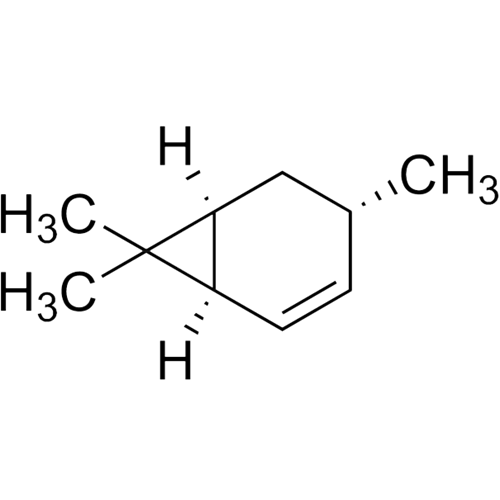 |
4-Carene () No description found. |
pdtdbl00056 |
Alloocimene () Alloocimene is a polyunsaturated molecule with high reactivity. It finds application for the stabilisation for polyurethane compounds and glycols. It is also used in essential oils reconstitution. |
pdtdbl00124 |
alpha-Phellandrene () Phellandrene is the name for a pair of organic compounds that have a similar molecular structure and similar chemical properties. α-Phellandrene and β-phellandrene are cyclic monoterpenes and are double-bond isomers. In α-phellandrene, both double bonds are endocyclic and in β-phellandrene, one of them is exocyclic. Both are insoluble in water, but miscible with ether. α-Phellandrene was named after Eucalyptus phellandra, now called Eucalyptus radiata, from which it can be isolated. It is also a constituent of the essential oil of Eucalyptus dives. β-Phellandrene has been isolated from the oil of water fennel and Canada balsam oil. The phellandrenes are used in fragrances because of their pleasing aromas. The odor of β-phellandrene has been described as peppery-minty and slightly citrusy. The α-phellandrene isomer can form hazardous and explosive peroxides on contact with air at elevated temperature. |
pdtdbl00050 |
alpha-Pinene () α-Pinene is a clear colorless liquid with a turpentine odor. Less dense than water and insoluble in water. Vapors are heavier than air. Used as a solvent. α-Pinene is an organic compound of the terpene class, one of two isomers of pinene. It is an alkene and it contains a reactive four-membered ring. It is found in the oils of many species of many coniferous trees, notably the pine. It is also found in the essential oil of rosemary (Rosmarinus officinalis). Both enantiomers are known in nature; (1S,5S)- or (−)-α-Pinene is more common in European Pines, whereas the (1R,5R)- or ±α-isomer is more common in North America. The racemic mixture is present in some oils such as eucalyptus oil and orange peel oil. At low exposure levels, α-Pinene is a bronchodilator in humans, and is highly bioavailable with 60% human pulmonary uptake with rapid metabolism or redistribution. α-Pinene is an anti-inflammatory via PGE1, and seems to be a broad-spectrum antibiotic. It exhibits activity as an acetylcholinesterase inhibitor, aiding memory. α-Pinene forms the biosynthetic base for CB2 ligands, such as HU-308. |
pdtdbl00121 |
alpha-Terpinene () The terpinenes are a group of isomeric hydrocarbons that are classified as terpenes. They each have the same molecular formula and carbon framework, but they differ in the position of carbon-carbon double bonds. α-Terpinene has been isolated from cardamom and marjoram oils, and from other natural sources. α-Terpinene is a perfume and flavoring chemical used in the cosmetics and food industries. Its use in both the pharmaceutical and the electronics semi-conductor manufacturing industries has also proven to be valuable. The biosynthesis of α-Terpinene and other terpenoids occurs via the mevalonate pathway because its starting reactant, dimethylallyl pyrophosphate (DMAPP), is derived from mevalonic acid. |
pdtdbl00175 |
alpha-Thujene () Thujene (or α-Thujene) is a natural organic compound classified as a monoterpene. It is found in the essential oils of a variety of plants, and contributes pungency to the flavor of some herbs such as Summer savory. The term thujene usually refers to α-thujene. A less common chemically related double-bond isomer is known as β-thujene (or 2-thujene). Another double-bond isomer is known as sabinene. |
pdtdbl00125 |
beta-Phellandrene () Phellandrene is the name for a pair of organic compounds, has citrus odor that have a similar molecular structure and similar chemical properties. α-Phellandrene and β-Phellandrene are cyclic monoterpenes and are double-bond isomers. In α-Phellandrene, both double bonds are endocyclic and in β-Phellandrene, one of them is exocyclic. Both are insoluble in water, but miscible with ether. β-Phellandrene is used in fragrances because of their pleasing aromas. The odor of β-Phellandrene has been described as peppery-minty and slightly citrusy. β-Phellandrene is used as insect-resist & insecticide, materials of terpenic resin and synthetic menthol. |
pdtdbl00049 |
beta-Pinene () beta-Pinene is a colorless liquid, soluble in alcohol, but not water. It has a woody-green pine-like smell. It occurs naturally in rosemary, parsley, dill, basil and rose. This is one of the most abundant compounds released by forest trees. If oxidized in air, the allylic products of the pinocarveol and myrtenol family prevail. There are two structural isomers found in nature: α-Pinene and β-Pinene. As the name suggests, both forms are important constituents of pine resin; they are also found in the resins of many other conifers, and more widely in other plants. Both are also used by many insects in their chemical communication system. Selective oxidation of pinene with some catalysts in chemical industry give many components for pharmacy, artificial odorants and so on. The primary oxidation product is verbenone. |
pdtdbl00053 |
Camphene () Camphene is a bicyclic monoterpene. It is nearly insoluble in water, but very soluble in common organic solvents. It volatilizes readily at room temperature and has a pungent smell. It is a minor constituent of many essential oils such as turpentine, cypress oil, camphor oil, citronella oil, neroli, ginger oil, and valerian. It is produced industrially by catalytic isomerization of the more common α-Pinene. Camphene is used in the preparation of fragrances and as a food additive for flavoring. Its mid-19th century use as a fuel for lamps was limited by its explosiveness. |
pdtdbl00184 |
cis-Ocimene () cis-Ocimene is found in allspice. Ocimene refers to several isomeric hydrocarbons. The Ocimenes are monoterpenes found within a variety of plants and fruits. α-Ocimene and the two β-Ocimenes differ in the position of the isolated double bond: it is terminal in the alpha isomer. α-Ocimene is 3,7-dimethyl-1,3,7-octatriene. β-Ocimene is 3,7-dimethyl-1,3,6-octatriene. β-Ocimene exists in two stereoisomeric forms, cis and trans, with respect to the central double bond. The ocimenes are often found naturally as mixtures of the various forms. The mixture (as well as the pure compounds) is an oil with a pleasant odor. It is used in perfumery. cis-Ocimene belongs to the family of Hemiterpenes. These are terpenes containing only one isoprene unit (C5-terpene). |
pdtdbl00220 |
D-Limonene () D-limonene is a clear colorless mobile liquid with a pleasant lemon-like odor, an oral dietary supplement containing a natural cyclic monoterpene and major component of the oil extracted from citrus peels with potential chemopreventive and antitumor activities. Although the mechanism of action has yet to be fully elucidated, limonene and its metabolites perillic acid, dihydroperillic acid, uroterpenol and limonene 1,2-diol may inhibit tumor growth through inhibition of p21-dependent signaling and may induce apoptosis via the induction of the transforming growth factor beta-signaling pathway. In addition, they inhibit post-translational modification of signal transduction proteins, resulting in G1 cell cycle arrest as well as differential expression of cell cycle- and apoptosis-related genes. |
pdtdbl00122 |
gamma-Terpinene () Gamma-terpinene is one these three isomeric hydrocarbons. It is natural and has been isolated from a variety of plant sources. |
pdtdbl00054 |
Limonene () Limonene is a chemical found in the peels of citrus fruits and in other plants. It is used to make medicine. Limonene is used to promote weight loss, prevent cancer, treat cancer, and treat bronchitis. In foods, beverages, and chewing gum, limonene is used as a flavoring. In pharmaceuticals, limonene is added to help medicinal ointments and creams penetrate the skin. In manufacturing, limonene is used as a fragrance, cleaner (solvent), and as an ingredient in water-free hand cleansers. |
pdtdbl00048 |
Myrcene () Myrcene, or β-Myrcene, is an olefinic natural organic compound. It is classified as a hydrocarbon, more precisely as a monoterpene. Terpenes are dimers of isoprene, and myrcene is one of the most important. It is a component of the essential oil of several plants including bay, cannabis, ylang-ylang, wild thyme, parsley, and hops. It is produced mainly semi-synthetically from myrcia, from which it gets its name. It is a key intermediate in the production of several fragrances. α-Myrcene is the name for the structural isomer 2-methyl-6-methylene-1,7-octadiene, which is not found in nature and is little used. Myrcene has an analgesic effect and is likely to be responsible for the medicinal properties of lemongrass tea. It has anti-inflammatory properties through Prostaglandin E2. The analgesic action can be blocked by naloxone or yohimbine in mice which suggests mediation by "α 2-Adrenoceptor stimulated release of endogenous opioids". Very high doses of myrcene potentiate barbiturate induced sleep in mice, further supporting the suggestions of sedative activity. It is likely that this is responsible for the use of hops and lemongrass as sedatives. Plants which contain myrcene are Cannabis, Hops, Houttuynia, Lemongrass, Mangoes, Myrcia, Thyme, Verbena, and West Indian Bay Tree. |
pdtdbl00137 |
Ocimene () Ocimenes are a group of isomeric hydrocarbons. The ocimenes are monoterpenes found within a variety of plants and fruits. α-Ocimene and the two β-ocimenes differ in the position of the isolated double bond: it is terminal in the alpha isomer. α-Ocimene is cis-3,7-dimethyl-1,3,7-octatriene. β-Ocimene is trans-3,7-dimethyl-1,3,6-octatriene. β-Ocimene exists in two stereoisomeric forms, cis and trans, with respect to the central double bond. The ocimenes are often found naturally as mixtures of the various forms. The mixture, as well as the pure compounds, are oils with a pleasant odor. They are used in perfumery. Like the related acyclic terpene myrcene, ocimenes are unstable in air. Like other terpenes, the ocimenes are nearly insoluble in water, but soluble in common organic solvents. |
pdtdbl00138 |
Sabinene () Sabinene is a natural bicyclic monoterpene. It is isolated from the essential oils of a variety of plants including holm oak (Quercus ilex) and Norway spruce (Picea abies). It has a strained ring system with cyclopentane ring fused to a cyclopropane ring. Sabinene is one of the chemical compounds that contributes to the spiciness of black pepper and is a major constituent of carrot seed oil. It also occurs in tea tree oil at a low concentration. It is also present in the essential oil obtained from nutmeg and Clausena anisata. |
pdtdbl00130 |
Terpinolene () Terpinolene is a water-white to light amber colored liquid. Insoluble in water and less dense than water. Used to make plastics and resins. The terpinenes are a group of isomeric hydrocarbons that are classified as terpenes. They each have the same molecular formula and carbon framework, but they differ in the position of carbon-carbon double bonds. α-Terpinene has been isolated from cardamom and marjoram oils, and from other natural sources. β-Terpinene has no known natural source, but has been prepared synthetically from sabinene. γ-Terpinene and δ-terpinene (also known as terpinolene) are natural and have been isolated from a variety of plant sources. |
for the query 'C10H16'
PDTDB by Dr. T. Ashok Kumar is licensed under a Creative Commons Attribution-NonCommercial-ShareAlike 4.0 International License.
Copyright © 2009 - 2026 BioGem.Org | Designed and maintained by Dr. T. Ashok Kumar
Last Modified on 20 June 2018
