
| Unique ID | Title and Description |
|---|---|
pdtdbl00194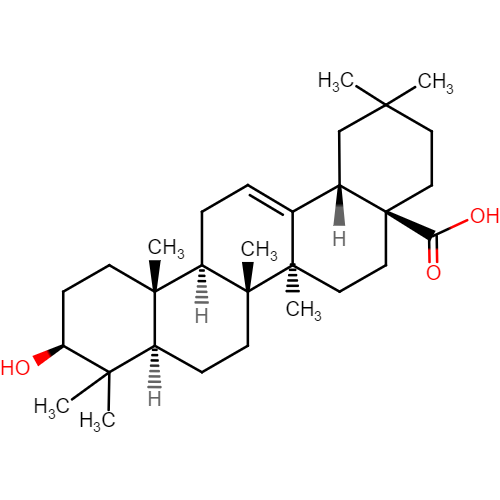 |
Oleanolic acid () Oleanolic acid is a naturally occurring triterpenoid related to betulinic acid. It is widely distributed in food and plants. Oleanolic acid can be found in olive oil, Phytolacca americana (American pokeweed), and Syzygium spp, garlic, etc. It was first studied and isolated from several plants, including Olea europaea (leaves, fruit), Rosa woodsii (leaves), Prosopis glandulosa (leaves and twigs), Phordendron juniperinum (whole plant), Syzygium claviflorum (leaves), Hyptis capitata (whole plant), Mirabilis jalapa and Ternstromia gymnanthera (aerial part). Other Syzygium species including java apple (Syzygium samarangense) and rose apples contain it. Oleanolic acid is relatively non-toxic, hepatoprotective, and exhibits antitumor and antiviral properties. Oleanolic acid was found to exhibit weak anti-HIV and weak anti-HCV activities in vitro, but more potent synthetic analogs are being investigated as potential drugs. |
pdtdbl00201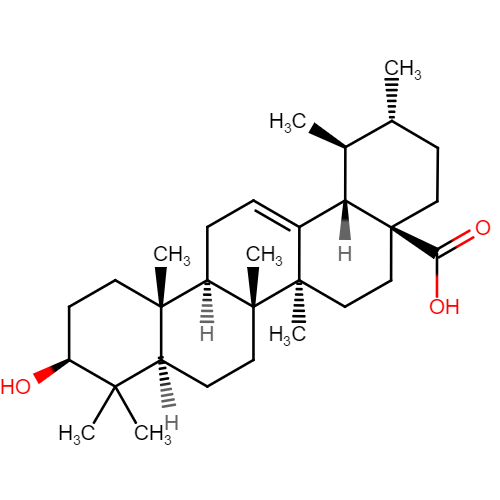 |
Ursolic acid () Ursolic acid is present in many plants, such as Mirabilis jalapa, as well as in many fruits and herbs used in daily life (e.g. apples, basil, bilberries, cranberries, elder flower, peppermint, rosemary, lavender, oregano, thyme, hawthorn, and prunes). Apple peels contain large quantities of ursolic acid and related compounds. Ursolic acid is used as a cosmetics additive. Ursolic acid can serve as a starting material for synthesis of more potent bioactive derivatives, such as experimental antitumor agents. |
for the query 'C30H48O3'
PDTDB by Dr. T. Ashok Kumar is licensed under a Creative Commons Attribution-NonCommercial-ShareAlike 4.0 International License.
Copyright © 2009 - 2026 BioGem.Org | Designed and maintained by Dr. T. Ashok Kumar
Last Modified on 20 June 2018
