
| Unique ID | Title and Description |
|---|---|
pdtdbl00115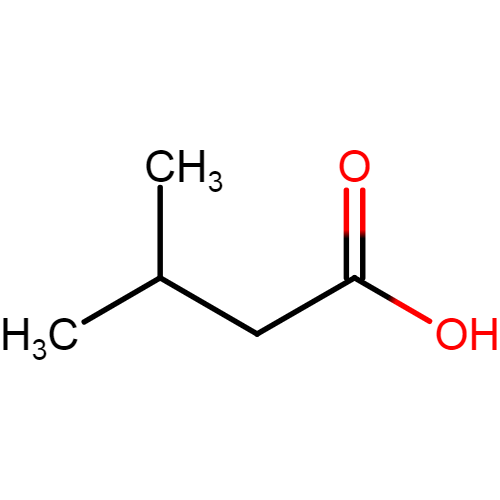 |
Isovaleric acid () 3-Methylbutanoic acid, or more commonly isovaleric acid, is an organic compound. It is sometimes classified as a fatty acid. It is a colourless liquid that is sparingly soluble in water, but highly soluble in most common organic solvents. The compound occurs naturally, including in essential oils. Isovaleric acid has a strong pungent cheesy or sweaty smell, but its volatile esters have pleasing scents and are used widely in perfumery. It has been proposed that it is the anticonvulsant agent in valerian. It is a major component of the cause of unpleasant foot odor, as it is produced by skin bacteria metabolizing leucine. Isovaleric acid is seen as the primary cause of the flavors added to wine caused by Brettanomyces yeasts. Other compounds produced by Brettanomyces yeasts include 4-ethylphenol, 4-vinylphenol, and 4-ethylguaiacol. An excess of isovaleric acid in wine is generally seen as a defect, as it can smell sweaty, leathery, or like a barnyard, but in small amounts it can smell smokey, spicy, or medicinal. These phenomena may be prevented by killing any Brettanomyces yeasts, such as by sterile filtration, by the addition of relatively large quantities of sulfur dioxide and sometimes sorbic acid, by mixing in alcoholic spirit to give a fortified wine of sufficient strength to kill all yeast and bacteria, or by pasteurization. Isovaleric acid can also be found in beer, and, excepting some English–style ales, is usually considered a flaw. It can be produced by the oxidation of hop resins, or by Brettanomyces yeasts present. |
pdtdbl00074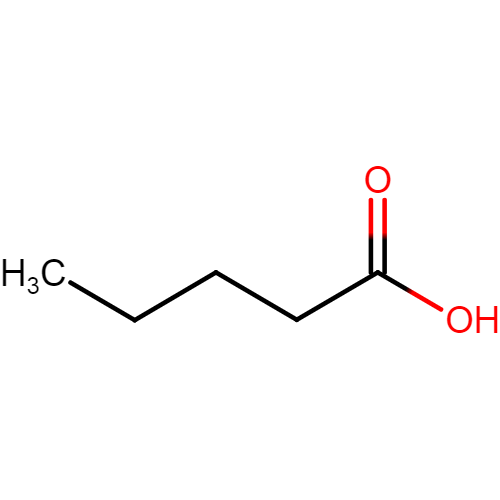 |
Valeric acid () Valeric acid or Pentanoic acid is a colorless liquid with a penetrating unpleasant odor. It is found naturally in the perennial flowering plant valerian (Valeriana officinalis), from which it gets its name. Its primary use is in the synthesis of its esters. Volatile esters of valeric acid tend to have pleasant odors and are used in perfumes and cosmetics. Ethyl valerate and pentyl valerate are used as food additives because of their fruity flavors. Valeric acid appears similar in structure to GHB and the neurotransmitter GABA in that it is a short-chain carboxylic acid, although it lacks the alcohol and amine functional groups that contribute to the biological activities of GHB and GABA, respectively. It differs from valproic acid simply by lacking a 3-carbon side-chain. Mevalonic acid is derived from valeric acid by methylation. |
for the query 'C5H10O2'
PDTDB by Dr. T. Ashok Kumar is licensed under a Creative Commons Attribution-NonCommercial-ShareAlike 4.0 International License.
Copyright © 2009 - 2026 BioGem.Org | Designed and maintained by Dr. T. Ashok Kumar
Last Modified on 20 June 2018
