
| Unique ID | Title and Description |
|---|---|
pdtdbl00141 |
Carvacrol () Carvacrol is present in the essential oil of Origanum vulgare (oregano), oil of thyme, oil obtained from pepperwort, and wild bergamot. The essential oil of Thyme subspecies contains between 5% and 75% of carvacrol, while Satureja (savory) subspecies have a content between 1% and 45%. Origanum majorana (marjoram) and Dittany of Crete are rich in carvacrol, 50% resp. 60-80%. It is also found in tequila. Oregano is used for respiratory tract disorders such as coughs, asthma, croup, and bronchitis. It is also used for gastrointestinal (GI) disorders such as heartburn and bloating. Other uses include treating menstrual cramps, rheumatoid arthritis, urinary tract disorders including urinary tract infections (UTIs), headaches, and heart conditions. The oil of oregano is taken by mouth for intestinal parasites, allergies, sinus pain, arthritis, cold and flu, swine flu, earaches, and fatigue. It is applied to the skin for skin conditions including acne, athlete's foot, oily skin, dandruff, canker sores, warts, ringworm, rosacea, and psoriasis; as well as for insect and spider bites, gum disease, toothaches, muscle pain, and varicose veins. Oregano oil is also used topically as an insect repellent. In foods and beverages, oregano is used as a culinary spice and a food preservative. |
pdtdbl00136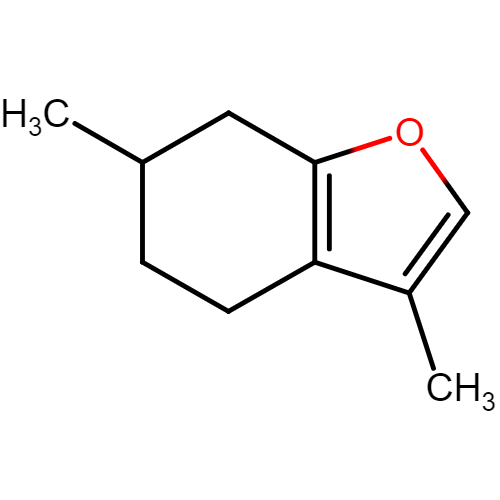 |
Menthofuran () Menthofuran is an organic compound found in a variety of essential oils including that of Pennyroyal. It is highly toxic and believed to be the primary toxin in Pennyroyal responsible for its potentially fatal effects. After ingestion of menthofuran, it is metabolically activated to chemically reactive intermediates that are hepatotoxic. Methofuran is produced biosynthetically from pulegone by the enzyme menthofuran synthase. Menthofuran was synthesized from 5-methylcyclohexane-1,3-dione and allenyldimethylsulfonium bromide in two steps via a novel furannulation strategy consisting of enolate addition and rearrangement. |
pdtdbl00139 |
Thymol () Thymol (also known as IPMP) is a natural monoterpene phenol derivative of cymene, found in oil of thyme, and extracted from Thymus vulgaris (common thyme) and various other kinds of plants as a white crystalline substance of a pleasant aromatic odor and strong antiseptic properties. Thymol also provides the distinctive, strong flavor of the culinary herb thyme, also produced from T. vulgaris. Thymol has antimicrobial activity because of its phenolic structure, and has shown antibacterial activity against bacterial strains including Aeromoans hydrophila and Staphylococcus aureus. In addition Thymol demonstrate confidential post antibacterial effect against some microorganisms. This antibacterial activity is caused by inhibiting growth and lactate production, and by decreasing cellular glucose uptake. Thymol has been used in alcohol solutions and in dusting powders for the treatment of tinea or ringworm infections, and was used in the United States to treat hookworm infections. It is also used as a preservative in halothane, an anaesthetic, and as an antiseptic in mouthwash. When used to reduce plaque and gingivitis, thymol has been found to be more effective when used in combination with chlorhexidine than when used purely by itself. Thymol is also the active antiseptic ingredient in some toothpastes, such as Euthymol. |
for the query 'C10H14O'
PDTDB by Dr. T. Ashok Kumar is licensed under a Creative Commons Attribution-NonCommercial-ShareAlike 4.0 International License.
Copyright © 2009 - 2026 BioGem.Org | Designed and maintained by Dr. T. Ashok Kumar
Last Modified on 20 June 2018
